

Project
Team (Sue, Adrija, Sahana)
Duration
6 Weeks
January 2026~ April 2026
My Role
Concept, Tangible Design, Motion Direction
Tools
Figma, Adobe After Effects, Illustrator
Client
Children's Museum of Pittsburgh
From
CMU Graduate Design Studio II
Overview
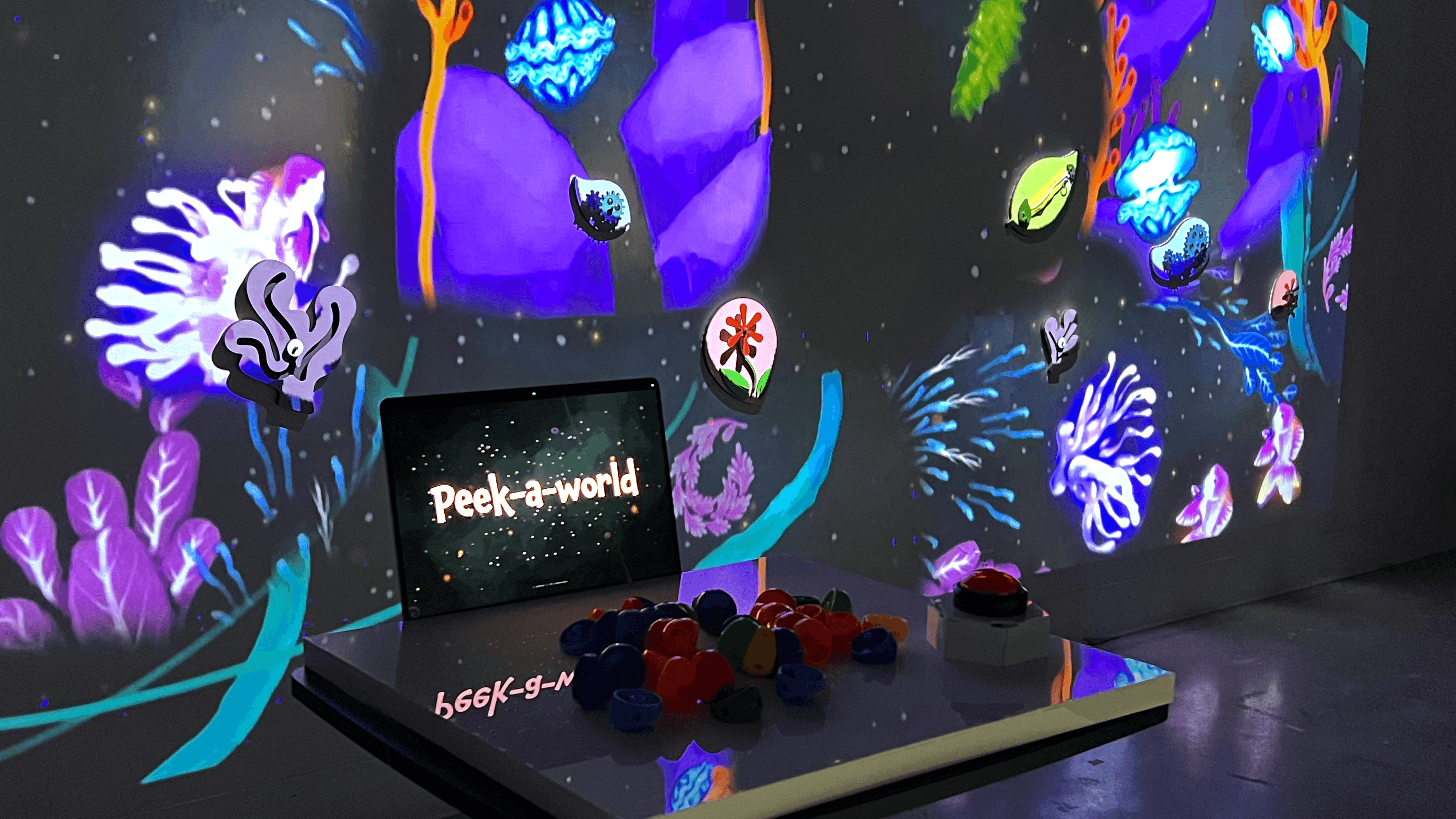
A children's museum installation that turns building blocks into a living wall.
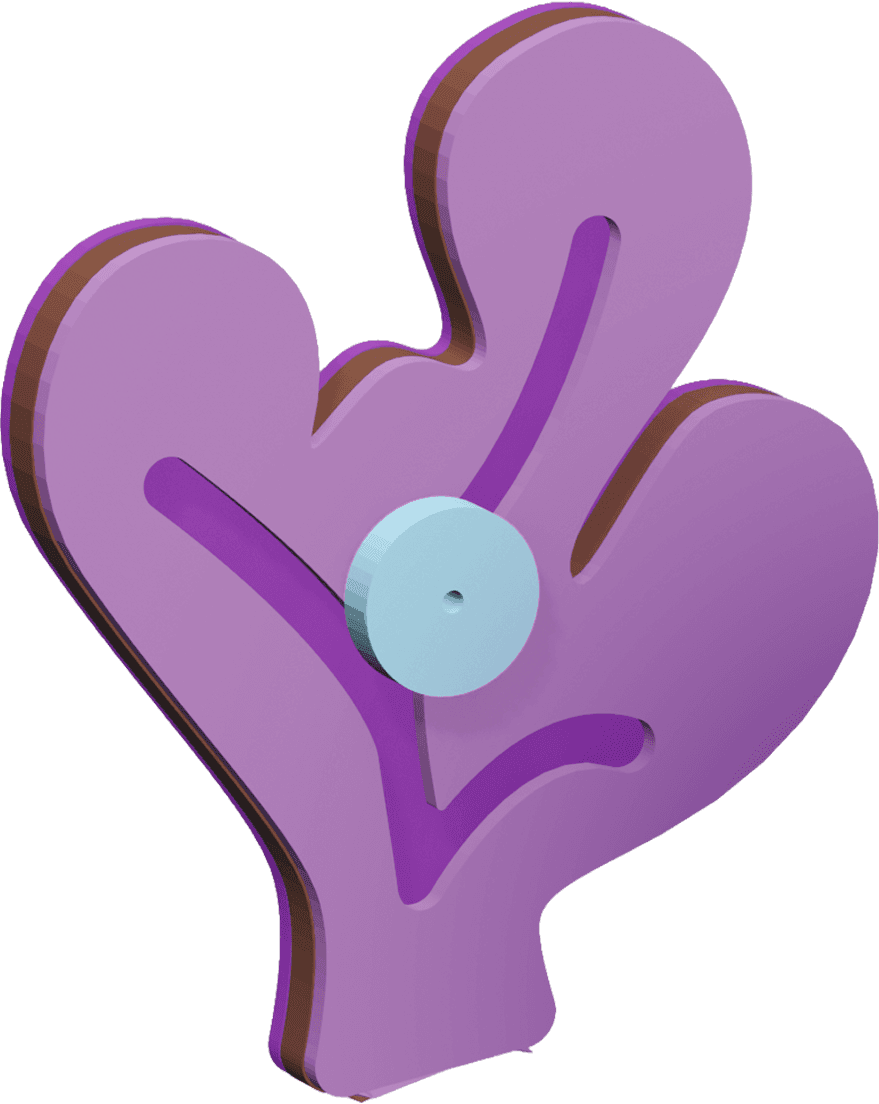
As children combine blocks into creatures, the wall reads each build and places it inside a projected ecosystem — a forest, river, or sky where the creature begins to grow, hide, and change alongside others. I led the tangible design (block form, weight, and grip for ages 4–8) and directed the concept video (narration, copy, and motion sequences).
Overview
A children's museum installation that turns building blocks into a living wall.
As children combine blocks into creatures, the wall reads each build and places it inside a projected ecosystem — a forest, river, or sky where the creature begins to grow, hide, and change alongside others. I led the tangible design (block form, weight, and grip for ages 4–8) and directed the concept video (narration, copy, and motion sequences).
Final Design
Concept video
Final Design
Concept video
The wall
The home screen surfaces only what the patient does next: three exercises, total time, one play button. History, week view, and achievements live further down — recovery sessions shouldn't begin with scrolling.
The wall
The home screen surfaces only what the patient does next: three exercises, total time, one play button. History, week view, and achievements live further down — recovery sessions shouldn't begin with scrolling.

The table and the blocks
The setup flow assumes the patient may have only one functional hand. Voice commands replace taps wherever they can, camera calibration uses large visual targets, and skip options exist for returning users so day 30 doesn't feel like day 1.
The table and the blocks
The setup flow assumes the patient may have only one functional hand. Voice commands replace taps wherever they can, camera calibration uses large visual targets, and skip options exist for returning users so day 30 doesn't feel like day 1.
The reveal moment
A patient lifts their arm, and on screen frosting flows onto a cupcake. The motion the therapist prescribed is the same motion the game requires. The patient isn't translating between "exercise" and "game," they're doing one thing. Difficulty scales with each patient's range-of-motion data, so the cupcakes get easier or harder without announcing the change. We deliberately avoided "level up" language. Progress should feel like recovery, not unlocked content.
The reveal moment
A patient lifts their arm, and on screen frosting flows onto a cupcake. The motion the therapist prescribed is the same motion the game requires. The patient isn't translating between "exercise" and "game," they're doing one thing. Difficulty scales with each patient's range-of-motion data, so the cupcakes get easier or harder without announcing the change. We deliberately avoided "level up" language. Progress should feel like recovery, not unlocked content.


Many children at once
Each tutorial runs under 30 seconds and shows the movement from the same angle the camera will see during the session. The patient's mental rehearsal matches what the screen will reflect back during the exercise.
Many children at once
Each tutorial runs under 30 seconds and shows the movement from the same angle the camera will see during the session. The patient's mental rehearsal matches what the screen will reflect back during the exercise.


Spatial system
The concept video introducing Peek-a-World
I directed the concept video that is the first version of the work the museum sees, and it had to carry the same softness the installation itself carries.
Spatial system
The concept video introducing Peek-a-World
I directed the concept video that is the first version of the work the museum sees, and it had to carry the same softness the installation itself carries.
Tangible system
The concept video introducing Peek-a-World
I directed the concept video that is the first version of the work the museum sees, and it had to carry the same softness the installation itself carries.
Tangible system
The concept video introducing Peek-a-World
I directed the concept video that is the first version of the work the museum sees, and it had to carry the same softness the installation itself carries.
Spatial Tone
The concept video introducing Peek-a-World
I directed the concept video that is the first version of the work the museum sees, and it had to carry the same softness the installation itself carries.
Spatial Tone
The concept video introducing Peek-a-World
I directed the concept video that is the first version of the work the museum sees, and it had to carry the same softness the installation itself carries.
The problem we started with
The Frictionless Childhood
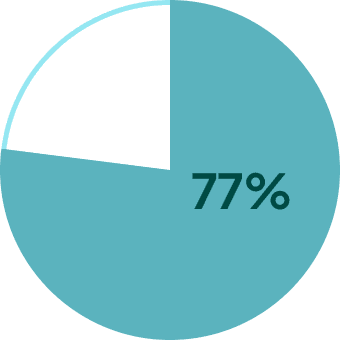
Early use of touchscreens has started to strip children of the "micro-challenges" that naturally build hand strength and coordination. Children are exposed to the digital world at a very early age. 40% of two-year-olds already own a personal tablet. Young children's ability to execute precise movements in the classroom is significantly diminishing — 77% of teachers say students are struggling with basic tools compared to five years ago, and 69% report an increase in students who cannot perform life skills like tying shoelaces or zipping coats. The average handgrip strength of children starting kindergarten has dropped by about 15–20% compared to ten years ago. This is called Manual Thinning.
The problem we started with
The Frictionless Childhood
Early use of touchscreens has started to strip children of the "micro-challenges" that naturally build hand strength and coordination. Children are exposed to the digital world at a very early age. 40% of two-year-olds already own a personal tablet. Young children's ability to execute precise movements in the classroom is significantly diminishing — 77% of teachers say students are struggling with basic tools compared to five years ago, and 69% report an increase in students who cannot perform life skills like tying shoelaces or zipping coats. The average handgrip strength of children starting kindergarten has dropped by about 15–20% compared to ten years ago. This is called Manual Thinning.
How this impacts curiosity
Limited manual dexterity leads to underdeveloped fine motor skills, which lowers intellectual engagement during play. The gap between what a child can imagine and what their hands can execute widens. Over time, this suppresses the natural inquiry that drives a child to ask why and how.
How this impacts curiosity
Limited manual dexterity leads to underdeveloped fine motor skills, which lowers intellectual engagement during play. The gap between what a child can imagine and what their hands can execute widens. Over time, this suppresses the natural inquiry that drives a child to ask why and how.
Who we designed for
4–8 year olds
The years between sensory verification and systematic thinking. Old enough to ask why, young enough that the body still leads the mind. This is the window where children move from sensory verification — touching, mouthing, dropping — into systematic thinking. Exploration still happens before explanation, but the hands are starting to be asked to do real work.
Who we designed for
4–8 year olds
The years between sensory verification and systematic thinking. Old enough to ask why, young enough that the body still leads the mind. This is the window where children move from sensory verification — touching, mouthing, dropping — into systematic thinking. Exploration still happens before explanation, but the hands are starting to be asked to do real work.
The research question
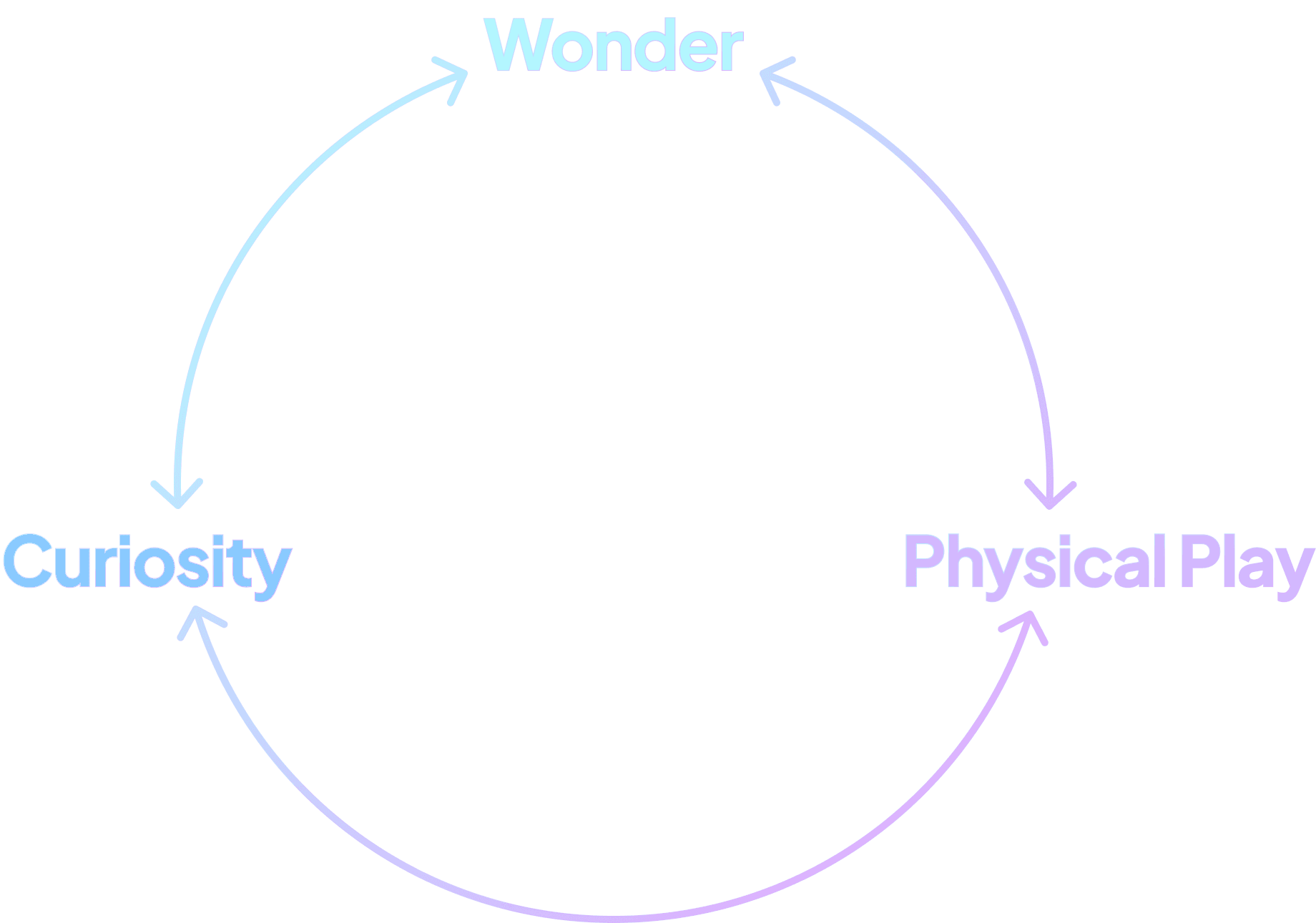
How might we create multi-sensory interactions that stimulate motor skills in children to spark wonder and encourage perceptual curiosity?
The years between sensory verification and systematic thinking. Old enough to ask why, young enough that the body still leads the mind. This is the window where children move from sensory verification — touching, mouthing, dropping — into systematic thinking. Exploration still happens before explanation, but the hands are starting to be asked to do real work.
The research question
How might we create multi-sensory interactions that stimulate motor skills in children to spark wonder and encourage perceptual curiosity?
The years between sensory verification and systematic thinking. Old enough to ask why, young enough that the body still leads the mind. This is the window where children move from sensory verification — touching, mouthing, dropping — into systematic thinking. Exploration still happens before explanation, but the hands are starting to be asked to do real work.
What I made 1
The toys for the wall
Through 8 user interviews and 4 expert interviews, we identified monotony, confusion, and disconnection from clinical guidance as key barriers to sustained home rehabilitation. Patients don’t just want to perform exercises correctly but to feel supported. "I do my exercises, but I don't know if I'm doing them right." — Patient #3, 4 months post-surgery "When my therapist isn't watching, my form drifts within a week." — Patient #6 "Compliance drops after week 3 unless we add visual milestones." — Occupational Therapist, 12 years in upper-limb rehab
What I made 1
The toys for the wall
Through 8 user interviews and 4 expert interviews, we identified monotony, confusion, and disconnection from clinical guidance as key barriers to sustained home rehabilitation. Patients don’t just want to perform exercises correctly but to feel supported. "I do my exercises, but I don't know if I'm doing them right." — Patient #3, 4 months post-surgery "When my therapist isn't watching, my form drifts within a week." — Patient #6 "Compliance drops after week 3 unless we add visual milestones." — Occupational Therapist, 12 years in upper-limb rehab
Patient Interview

Full interview protocols and synthesis in case deck.
What I made 2
The concept video introducing Peek-a-World
I directed the concept video that is the first version of the work the museum sees, and it had to carry the same softness the installation itself carries.
What I made 2
The concept video introducing Peek-a-World
I directed the concept video that is the first version of the work the museum sees, and it had to carry the same softness the installation itself carries.
What I made 3
The thinking that connected them
The blocks and the video came from the same frame I helped shape: frictionless childhood needs friction returned, not removed. Once that frame held, the structure followed — physical build, digital response, ecosystem as the bridge. I designed both ends of that bridge so the seam wouldn't show.
What I made 3
The thinking that connected them
The blocks and the video came from the same frame I helped shape: frictionless childhood needs friction returned, not removed. Once that frame held, the structure followed — physical build, digital response, ecosystem as the bridge. I designed both ends of that bridge so the seam wouldn't show.
Concept evolution
The thinking that connected them
The blocks and the video came from the same frame I helped shape: frictionless childhood needs friction returned, not removed. Once that frame held, the structure followed — physical build, digital response, ecosystem as the bridge. I designed both ends of that bridge so the seam wouldn't show.
Concept evolution
The thinking that connected them
The blocks and the video came from the same frame I helped shape: frictionless childhood needs friction returned, not removed. Once that frame held, the structure followed — physical build, digital response, ecosystem as the bridge. I designed both ends of that bridge so the seam wouldn't show.